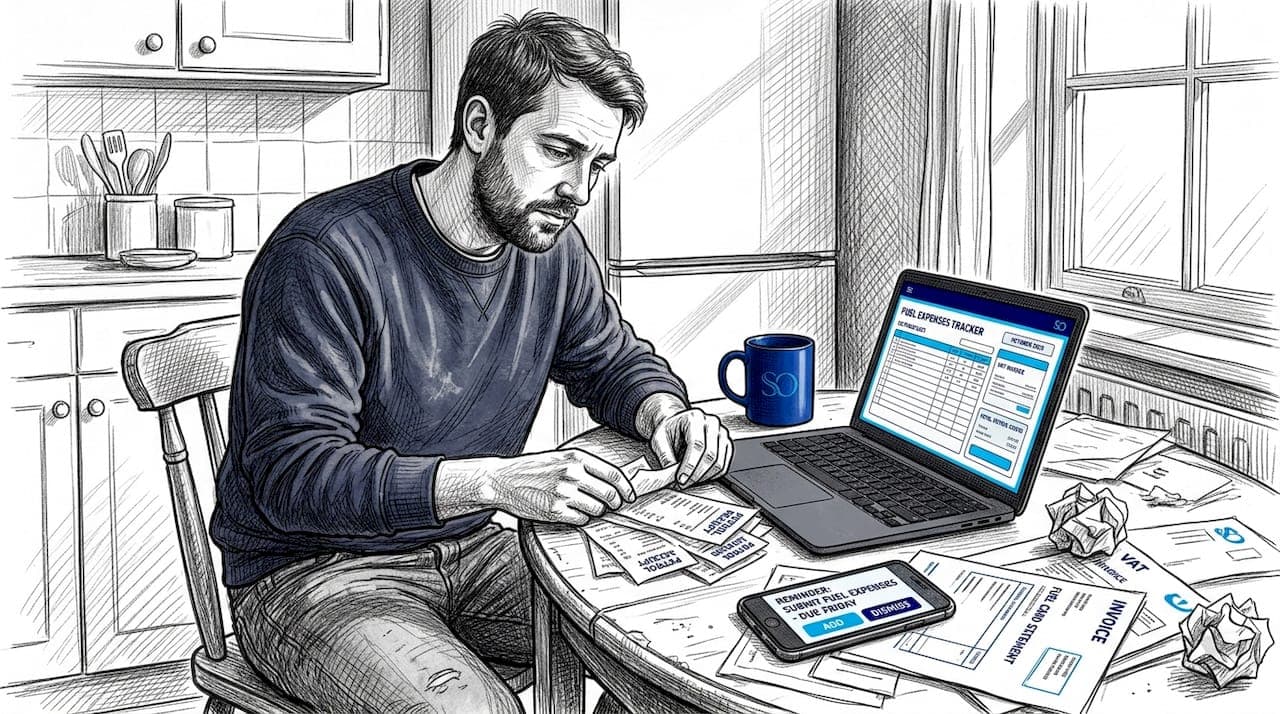
Running your own business means every penny counts. If you've ever arrived at the end of the month with a crumpled pile of fuel receipts, a vague memory of what you spent, and a sinking feeling about your VAT claim, you're not alone. Fuel is one of the biggest running costs for sole traders in the UK, yet most people manage it with nothing more than a personal bank card and a lot of hope. Sole traders can apply for a fuel card with even one vehicle, making it a genuinely practical tool for anyone who drives for work. This guide walks you through every step, from understanding the benefits to activating your first card.
Table of Contents
- Why fuel cards matter for sole traders
- Getting ready: what you need before you apply
- Step-by-step: how to apply for a fuel card as a sole trader
- Common mistakes and expert tips for sole traders
- What to expect: typical savings and daily benefits
- The uncomfortable truth most guides miss about fuel cards
- Ready to save? Compare and apply in minutes
- Frequently asked questions
Key Takeaways
| Point | Details |
|---|---|
| Preparation is crucial | Gather the right documents and assess your fuel needs before applying for a card. |
| Prepaid cards are an option | If you have little or no credit history, prepaid fuel cards let you access the same networks and discounts. |
| Watch for hidden fees | Check for minimum monthly spends or network mismatches to avoid unexpected costs. |
| Digital records mean easier tax | Fuel cards provide HMRC-approved invoices and online tracking to simplify expense claims. |
Why fuel cards matter for sole traders
The admin burden of managing fuel expenses manually is real, and it compounds over time. Every receipt you lose is a potential VAT claim gone. Every time you forget to log a journey, your HMRC records become less reliable. A fuel card removes most of that friction in one move.
Here's what you actually get when you use a fuel card properly:
- HMRC-compliant invoices issued automatically each week or month, so your tax records are always clean
- No receipt chasing because every transaction is logged digitally against your account
- Online account management so you can see exactly what you've spent, where, and when
- Potential discounts of between 3p and 12p per litre depending on the card you choose
- Fixed weekly pricing on some cards, which protects you from pump price spikes mid-week
- VAT reclaim made simple because the invoices are formatted exactly as HMRC requires
Fuel cards simplify admin for sole traders by providing HMRC-compliant invoices, eliminating receipt keeping, and offering online tracking, which is ideal for tax returns. That's not a minor convenience. For a sole trader filing a self-assessment return, having a clean, itemised record of every fuel purchase across the year is genuinely valuable.
"A fuel card isn't just a payment tool. For a sole trader, it's an admin system, a VAT tool, and a cost-control mechanism all in one."
The fuel card benefits extend well beyond simple discounts. Centralising all your fuel spend onto one account means you have a single source of truth for your business expenses, which makes bookkeeping faster and reduces the risk of errors on your tax return.
Now that you know a fuel card could make life easier, let's cover what you need before applying.
Getting ready: what you need before you apply
Preparation is where most sole traders either save themselves time or create unnecessary delays. The good news is that getting ready doesn't take long if you know what's needed.
Documents and information you'll need
| Item | Why it's needed |
|---|---|
| Business name and trading address | Verifies your identity as a sole trader |
| VAT registration number (if applicable) | Required for VAT invoicing |
| Bank account details | For setting up payment or direct debit |
| Proof of identity (passport or driving licence) | Standard credit or ID check requirement |
| Proof of address (utility bill or bank statement) | Confirms your trading location |
| Vehicle registration number(s) | Links card usage to specific vehicles |
General application steps include assessing your business fuel needs, researching providers, checking your credit rating, and gathering the documents above. Doing this in one sitting before you start comparing cards will make the whole process much smoother.
Assessing your fuel usage honestly
Before you choose a card, spend ten minutes working out your actual monthly fuel spend. Think about the routes you drive regularly, the fuel type your vehicle uses (diesel or petrol), and roughly how many litres you fill up each month. This matters because some cards have minimum spend requirements, and choosing the wrong one could mean paying fees for a card that doesn't suit your usage pattern.
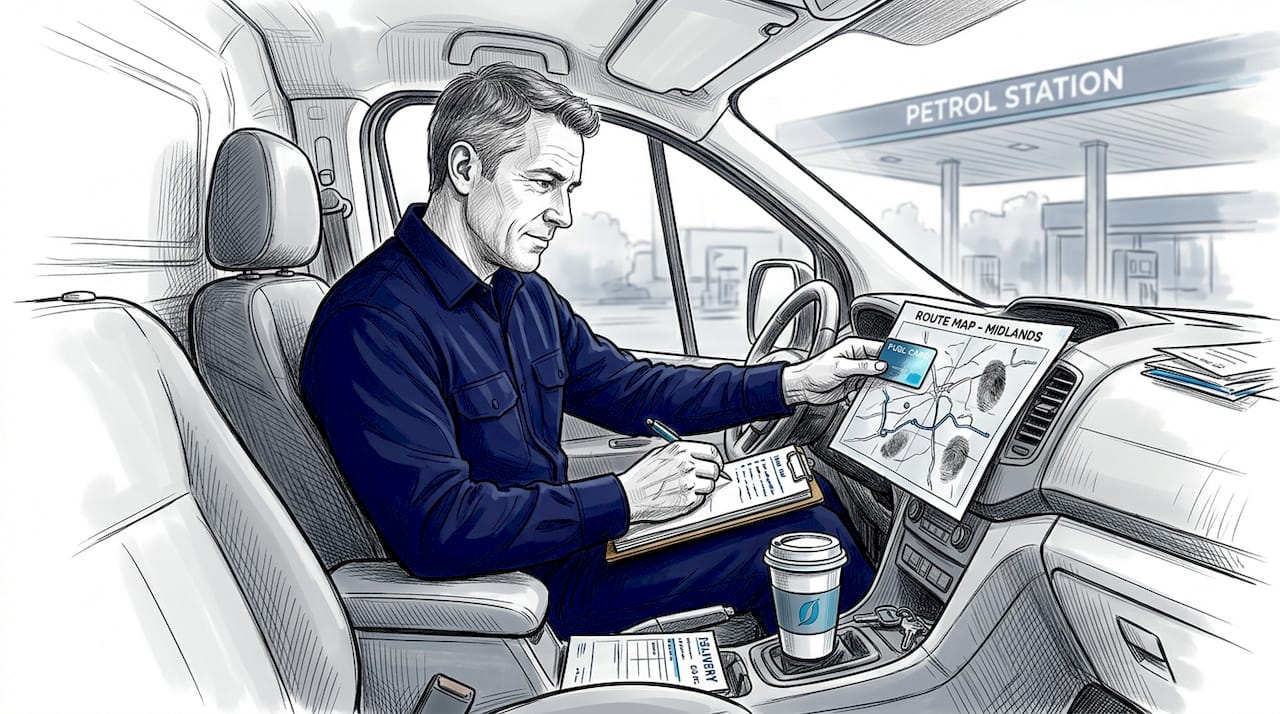
Check which filling stations are on your regular routes. Some cards only work at specific networks, so a card with excellent discounts is useless if the nearest accepted site is ten miles out of your way. You can check accepted fuel card networks to see which stations are covered before you commit.
What about credit history?
If you're a new sole trader or your credit history is thin, don't let that put you off. Many providers offer prepaid fuel card options that require no credit check at all. You top up the card before you use it, and the same discounts and networks often apply. It's a smart starting point if you're not sure your credit profile will pass a standard check.
Pro Tip: Check your credit report before applying. A free check through services like Experian or ClearScore takes five minutes and means you won't be surprised by the outcome. If your score is lower than expected, go straight to a prepaid option rather than risking a hard credit search that could affect future applications.
Now you're prepared, let's walk through the application process step by step.
Step-by-step: how to apply for a fuel card as a sole trader
The process is more straightforward than most people expect. Here's exactly what happens from start to finish.
-
Research and compare cards. Use a comparison tool to filter cards by fuel type, network coverage, fee structure, and whether you need credit or prepaid. Don't skip this step. The right card for a courier doing 2,000 miles a month is different from the right card for a plumber doing 400 miles.
-
Gather your documents. Use the checklist in the previous section. Having everything ready before you start the form saves time and avoids the application timing out.
-
Complete the online or phone application. Most providers have a simple online form. It typically takes under fifteen minutes to complete.
-
Credit check and approval. Approval with a credit check usually takes one to three working days. Some providers offer same-day decisions. During this period, the provider assesses your creditworthiness and decides on your credit limit.
-
Understand the outcome. Most providers require a credit check, and outcomes can vary. You might receive a full credit limit, a reduced limit, a request for a security deposit, or an offer to switch to a prepaid option. None of these outcomes means you can't get a card. They just affect the terms.
-
Activate your card. Once it arrives in the post (usually within five working days of approval), you activate it online or by phone, set your PIN, and you're ready to fill up.
-
Set up your online account. Log in and explore the dashboard. Set up any alerts, link your vehicle registrations, and check the invoicing schedule so you know when statements will arrive.
Credit vs. prepaid: a quick comparison
| Feature | Credit fuel card | Prepaid fuel card |
|---|---|---|
| Credit check required | Yes | No or light check |
| Payment timing | Weekly or monthly invoice | Top up before use |
| Suitable for | Established businesses | New traders, thin credit |
| Discount access | Full | Full on most cards |
| Spending limit | Set by provider | Limited to top-up balance |
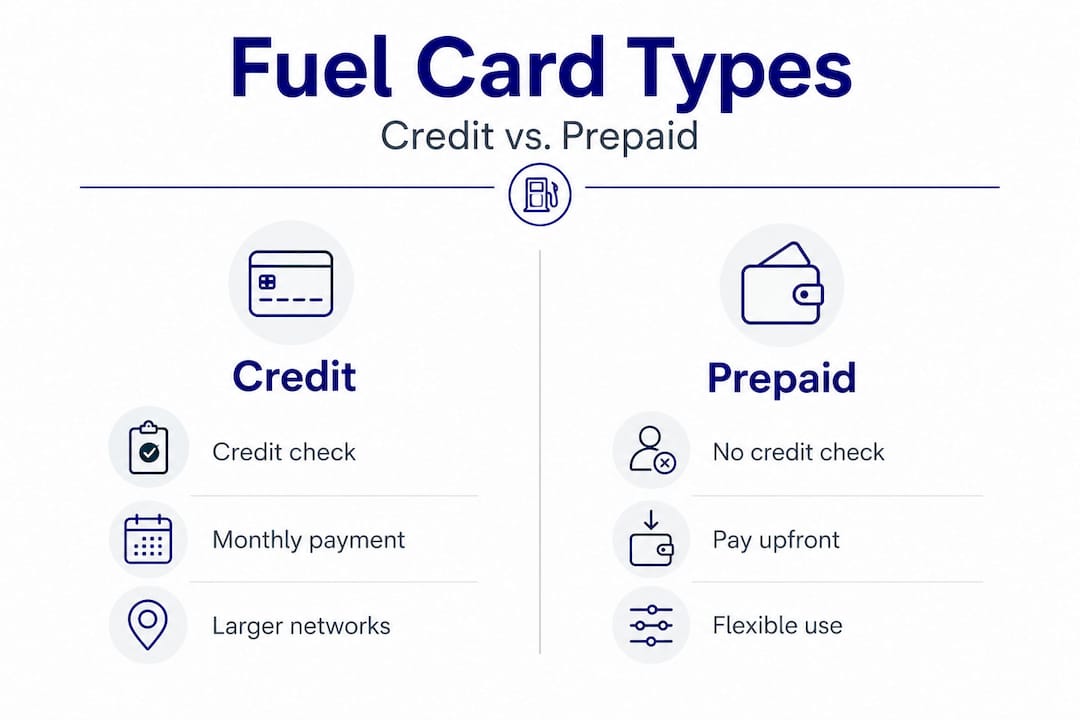
Prepaid options such as pay-as-you-go cards require no credit check and still offer the same discounts and network access as standard credit cards. They're not a lesser product. They're simply a different payment structure.
Pro Tip: If you're applying for a credit fuel card for the first time, ask the provider what their minimum credit score requirement is before you apply. This prevents unnecessary hard searches on your credit file.
You can also compare the fuel card process across multiple providers in one place, which saves you repeating the same research on five different websites.
Once your card arrives, here's how to avoid common pitfalls and get maximum value.
Common mistakes and expert tips for sole traders
Even with the right card in hand, it's easy to undermine the value if you're not careful. These are the mistakes that cost sole traders money and time.
Choosing a card with network coverage that doesn't match your routes. A card accepted at 7,500 sites sounds impressive, but if none of those sites are near your regular routes, you'll end up driving out of your way to use it. Always map your routes against the network before applying.
Ignoring minimum spend requirements. Some cards have minimum spend requirements of £300 to £500 per month, and fees apply if you don't meet them. If your monthly fuel spend is £150, a card with a £300 minimum will cost you more than it saves.
Not understanding fixed-price versus pump-price cards. Fixed-price cards lock in a weekly price set by the provider, which is usually lower than the forecourt price and protects you from mid-week fluctuations. Pump-price cards charge whatever the forecourt is showing that day. Both have their place, but knowing the difference helps you choose correctly.
Overlooking monthly fees. Some cards charge monthly fees of £2 to £4 while others are completely free. Over a year, a £4 monthly fee adds up to £48. If you're only saving £30 a month in fuel discounts, the maths doesn't work.
"The best fuel card is the one that fits your actual driving habits, not the one with the most impressive headline discount."
- Always read the fee schedule before applying, not after
- Check whether the card covers both petrol and diesel if your vehicle type might change
- Keep your online account updated with current vehicle registrations to avoid transaction disputes
- Use the digital invoice each month as your primary fuel expense record for HMRC
Cutting fuel costs isn't just about the pence-per-litre saving. It's about the total cost of ownership, including fees, admin time saved, and the accuracy of your tax records.
Knowing these pitfalls, let's see what savings and benefits you can realistically expect.
What to expect: typical savings and daily benefits
Let's put some numbers on this. The savings vary by card, usage, and fuel type, but here's a realistic picture of what's available.
| Card | Monthly fee | Estimated saving | Network size | Best for |
|---|---|---|---|---|
| fuelGenie | None | 3 to 5p per litre | Supermarkets | Low-mileage sole traders |
| Allstar One | £2 to £3 | 5 to 8p per litre | 7,500+ sites | Mixed-route drivers |
| UK Business Buddy | None | Up to 12p per litre | 4,500+ sites | Regular high-mileage users |
Popular cards for sole traders include fuelGenie, which charges no fees and offers supermarket pricing with savings of 3 to 5p per litre, and UK Business Buddy, which also has no fees but offers savings of up to 12p per litre across 4,500 sites. Fixed weekly pricing on cards like Allstar One protects against pump price fluctuations, which can shift by 3 to 5p in a single week during volatile periods.
To put the savings in context: if you fill up 60 litres of diesel twice a week and save 8p per litre, that's £9.60 per week or roughly £499 per year. Over five years, that's nearly £2,500 back in your pocket, simply by switching how you pay for fuel.
The daily operational benefits are just as significant. No more stopping to photograph receipts. No more end-of-month scramble to reconcile your bank statement with your mileage log. Your fuel card networks page shows exactly which stations you can use, so planning routes becomes straightforward.
Having seen the numbers, let's talk honest truths and missteps many guides ignore.
The uncomfortable truth most guides miss about fuel cards
Here's something most comparison sites won't tell you: a fuel card is not automatically worth it for every sole trader.
If you drive irregularly, use different fuel types depending on the job, or your monthly fuel spend is below £150, the maths can work against you. A card with a £3 monthly fee and a minimum spend you can't consistently meet will cost you money, not save it. The headline discount looks great until you factor in the fee and the inconvenience of driving to a specific network.
The real value of fuel cards comes from three things working together: regular fuel spend, consistent routes, and disciplined record-keeping. If all three are in place, a fuel card is genuinely one of the best financial tools available to a sole trader. If only one or two apply, you need to choose more carefully.
Many sole traders are actually better served by a prepaid supermarket fuel card than by a traditional credit-based fleet card. The savings are smaller in pence per litre terms, but the network is on your doorstep, there's no credit check, no minimum spend, and the invoices are still HMRC-compliant. It's a quieter, less glamorous solution that often delivers more consistent value for lower-mileage traders.
The honest advice is this: match the card to your actual behaviour, not your aspirational behaviour. If you're ready to put these steps into action, here's how to make fuel card comparison and application even easier.
Ready to save? Compare and apply in minutes
Finding the right fuel card used to mean hours of research across multiple provider websites, each with different fee structures, network maps, and application forms. FuelCard Store removes all of that friction.
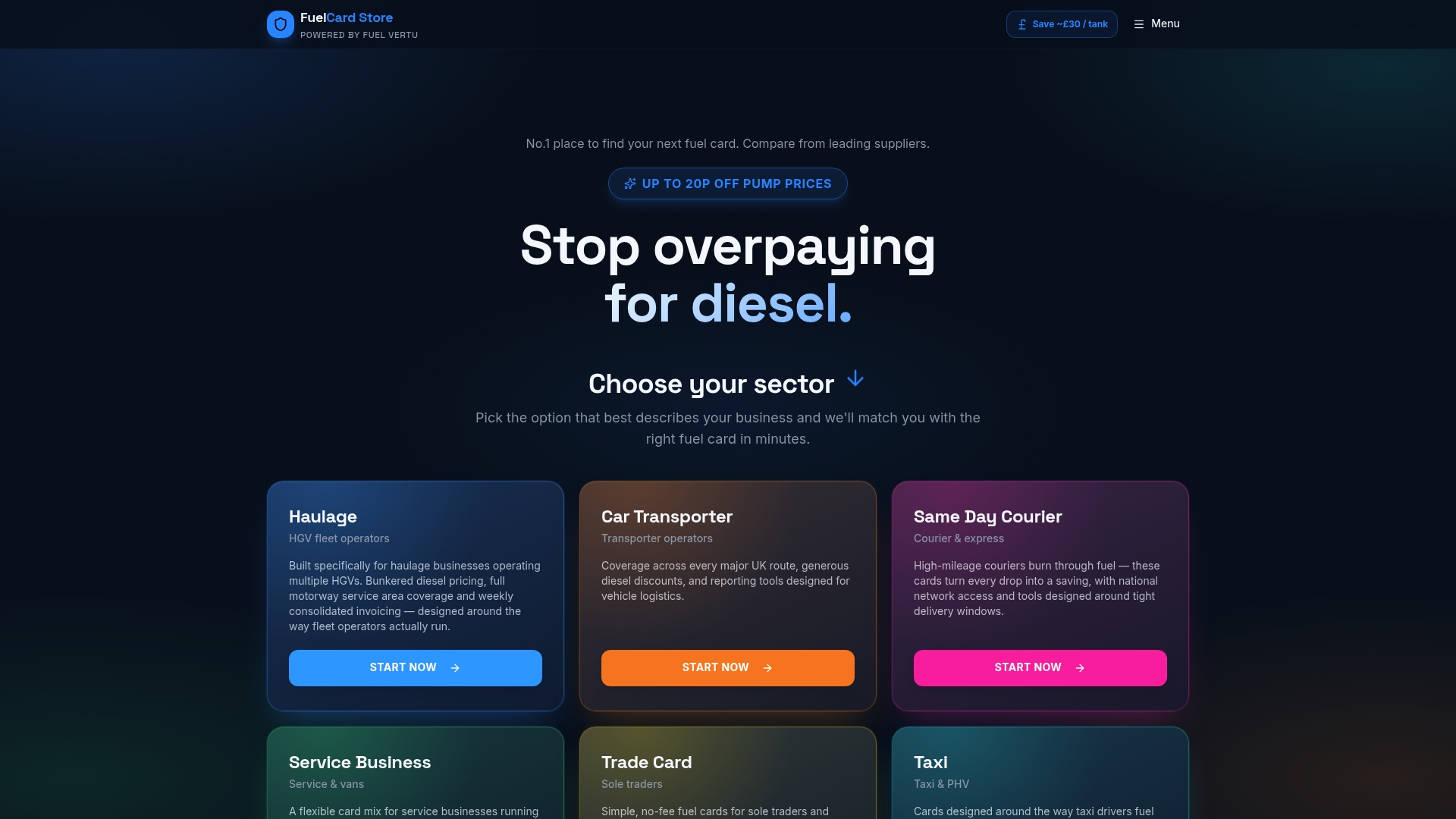
You can compare fuel cards from multiple providers in one place, filtered by your business type, fuel usage, and preferred network. The process is free, there's no obligation, and you won't be charged a penny for using the comparison tool. Once you've found the right card, you can apply directly through the platform. You can also browse accepted locations to confirm your regular filling stations are covered before you commit. For UK sole traders who want to stop losing money on fuel admin and start saving on every litre, this is the fastest route to getting it done.
Frequently asked questions
Can sole traders get a fuel card with only one vehicle?
Yes, UK sole traders can apply for a fuel card with just one vehicle. You don't need a fleet to qualify.
What happens if I fail a fuel card credit check?
You may be offered a reduced credit limit, asked to pay a security deposit, or offered a prepaid alternative. Most providers have options for applicants with limited or poor credit history.
Do all fuel cards require monthly minimum spending?
Not all, but some cards require £300 to £500 in monthly spend and may charge fees if you fall short. Always check the terms before applying.
Are fuel card invoices suitable for HMRC purposes?
Yes. Fuel cards provide HMRC-compliant invoices that are formatted correctly for VAT reclaims and self-assessment tax returns, removing the need to keep paper receipts.