
Many small business owners assume a fuel card works like a company credit card, letting drivers buy whatever catches their eye at the forecourt. In reality, the right card can be configured to do the opposite. Restricted fuel cards are specifically designed to limit what your drivers can purchase, keeping spend firmly on fuel and nothing else. This guide explains exactly what restricted fuel cards are, how their controls work, and why they could be one of the most practical tools available to UK small businesses looking to cut costs and tighten oversight.
Table of Contents
- What are restricted fuel cards?
- How do restricted fuel card controls work?
- When are restricted fuel cards most effective?
- Benefits and potential pitfalls of restricted fuel cards
- Why most businesses overlook restricted fuel cards
- Find the best fuel card solution for your business
- Frequently asked questions
Key Takeaways
| Point | Details |
|---|---|
| Clear spending controls | Restricted fuel cards let you limit purchases to fuel and approved items, curbing misuse. |
| Streamlined accounting | Expense reports are easier to manage when only business-related purchases are made. |
| Reduced tax risk | Cards designed for VAT-registered businesses guard against accidental tax liabilities from private mileage. |
| Best for UK fleets | Restricted cards work especially well for lorry fleets and logistics where tight control is needed. |
| Expert support available | Providers can help you configure your card restrictions to optimise control for your business. |
What are restricted fuel cards?
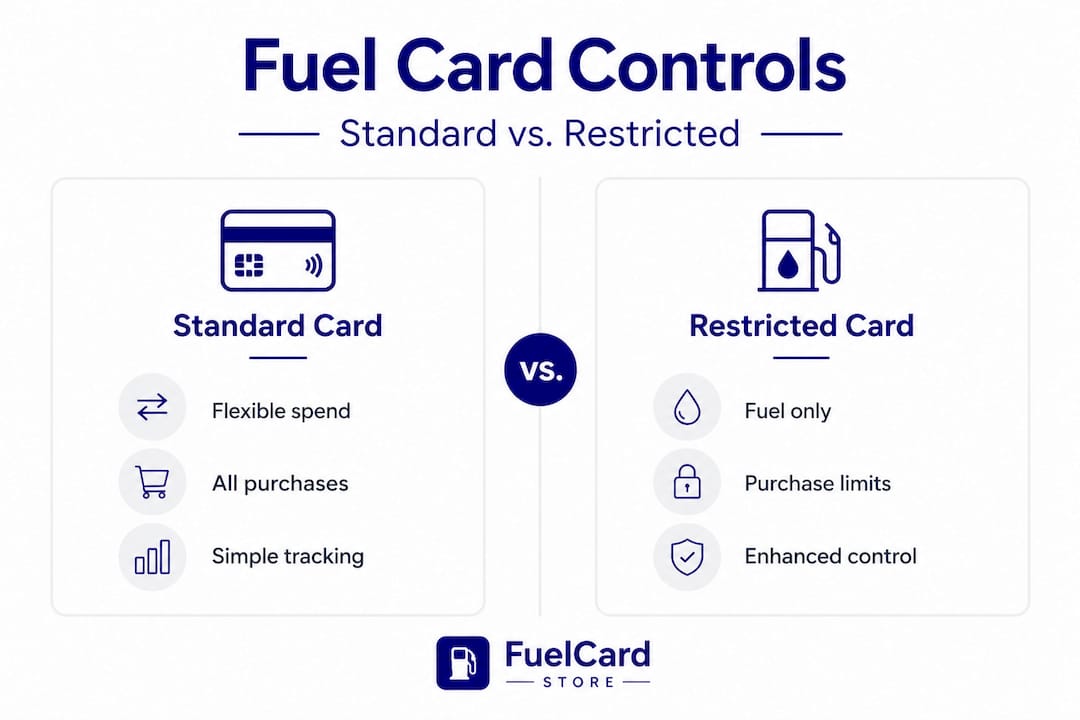
Not all fuel cards are built the same. A standard fuel card might allow your driver to fill up the tank, grab a bottle of oil, run the vehicle through a car wash, and pick up a sandwich from the forecourt shop, all on the same transaction. That flexibility sounds convenient, but for a business owner trying to manage costs, it creates a headache. Where does the fuel spend end and the personal spend begin?
Restricted fuel cards are business fuel cards in the UK with configurable purchase controls that limit usage to fuel only or specific products and services, preventing misuse on non-fuel items like shop purchases. In plain terms, they are cards that only work for what you say they work for.
The distinction matters enormously for fuel card cost management because it directly affects how accurately you can track, report, and reclaim fuel expenditure. When a card is unrestricted, your monthly invoice becomes a mixed bag of fuel, sundries, and personal items that someone has to untangle manually. With a restricted card, every transaction is clean and purposeful.
Here is a straightforward comparison to illustrate the difference:
| Feature | Restricted fuel card | Standard fuel card |
|---|---|---|
| Fuel purchases | Yes | Yes |
| AdBlue and oils | Configurable | Often permitted |
| Car wash | Configurable | Often permitted |
| Forecourt shop items | Blocked | Often permitted |
| VAT reclaim simplicity | High | Moderate |
| Misuse risk | Low | Higher |
| Admin burden | Lower | Higher |
The key advantages of restricted cards for business owners include:
- Precise spend tracking across your entire fleet
- Reduced risk of personal purchases appearing on business accounts
- Simpler VAT reclaim because all transactions relate directly to business fuel
- Cleaner invoicing that requires less manual review each month
- Greater accountability among drivers who know the card has defined limits
You can also check which stations and retailers are part of accepted fuel card networks to ensure your drivers have convenient access without compromising on controls.
How do restricted fuel card controls work?
Understanding the mechanics behind restricted cards helps you choose the right configuration for your business. The controls are not simply a blanket block. They are layered, flexible, and often more sophisticated than business owners expect.
Here is how the typical restriction system operates step by step:
- Card issuance with preset parameters. When you apply for a restricted fuel card, you work with the provider to define exactly what the card can and cannot be used for. This happens before the card reaches your driver.
- Merchant category codes (MCCs). Every retailer and forecourt is assigned a merchant category code. Restricted cards are programmed to only authorise transactions at specific MCCs, such as petrol stations, blocking anything outside that category automatically.
- Product-level restrictions. Some providers go further, restricting not just where the card works but what products can be purchased within a permitted location. Some cards are restricted to fuel purchases, while others also cover AdBlue, oil, or even car washes, giving you granular control over exactly what your drivers can buy.
- PIN and chip-and-pin authentication. Every transaction requires a PIN, which ties each purchase to a specific driver. This creates an audit trail and deters unauthorised use.
- Spending limits and volume caps. You can set daily, weekly, or per-transaction limits to prevent unusually large fills that might indicate misuse or a vehicle issue.
- Real-time alerts and reporting. Many providers offer online portals where you can monitor transactions as they happen, flagging anything outside normal patterns immediately.
"The real power of a restricted fuel card is not what it blocks. It is what it reveals. When every transaction is clean and categorised, patterns become visible and problems become solvable."
For businesses that want an additional layer of control, prepaid fuel card controls offer a useful alternative. With a prepaid card, you load a fixed amount onto the card in advance, meaning drivers can only spend what has been allocated. This prevents any unplanned purchases entirely, which is particularly useful for sole traders or small teams where cash flow needs careful management.
Pro Tip: Review your card's restriction settings every quarter. Business needs change, vehicles change, and the products your drivers genuinely require may shift over time. Keeping your settings current prevents both unnecessary blocks and unintended permissions.
When are restricted fuel cards most effective?
The mechanics are clear, but knowing when to reach for a restricted card is equally important. These cards are not universally necessary for every business, but in certain situations they are genuinely transformative.
Fleet operators and HGV businesses are among the biggest beneficiaries. When you have multiple drivers covering different routes, the potential for inconsistent spending is significant. Restricted cards for HGV fleets ensure that every litre purchased is accounted for correctly, regardless of which driver is behind the wheel.
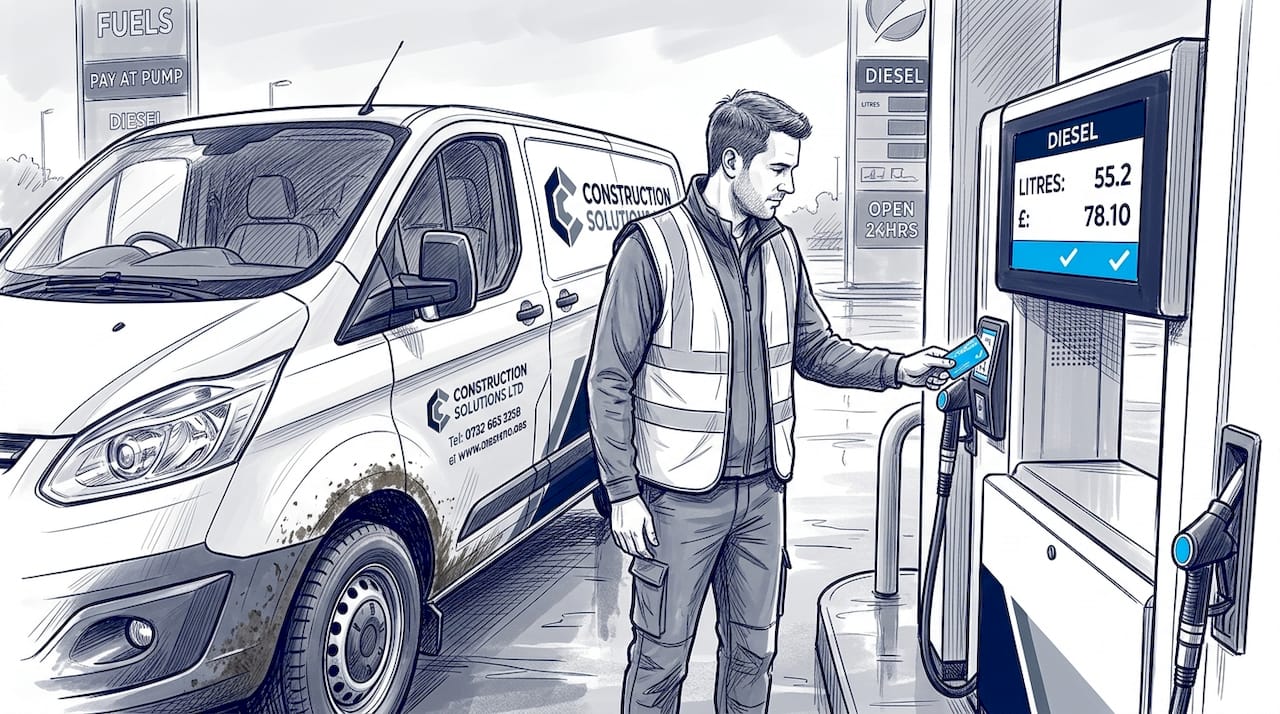
VAT-registered businesses gain a particularly strong advantage. Because restricted cards block non-fuel purchases, every transaction on your invoice is eligible for VAT reclaim without the need to manually separate fuel from shop items. This alone can save your accounts team considerable time each month.
Businesses where drivers mix personal and business travel face a specific risk. If a driver uses a company card for personal mileage, the business can face a P11D tax liability, which is a benefit-in-kind charge applied when employees receive personal benefits from their employer. Fuel cards are not for personal use and are business and VAT-registered only, meaning private mileage requires reimbursement to avoid tax liabilities including P11D reporting. Restricted cards reduce the temptation and the opportunity for this to happen accidentally.
Here is a practical overview of business types and how restricted cards address their specific challenges:
| Business type | Key risk without restriction | How restricted cards help |
|---|---|---|
| Courier and delivery | Drivers making personal purchases | Blocks non-fuel transactions entirely |
| HGV and haulage | High-volume spend hard to audit | Clean invoices, per-driver tracking |
| Tradespeople | Mixed personal and business use | Prevents shop and sundry purchases |
| Taxi and private hire | Frequent small fills, hard to track | Volume caps and PIN tracking |
| Service businesses | Multiple vehicles, inconsistent spend | Centralised controls across all cards |
For businesses operating in sectors with specific VAT requirements for fuel card users, restricted cards also simplify compliance by ensuring the card is only ever used for qualifying purchases.
Additional scenarios where restricted cards prove their value:
- New drivers or contractors who have not yet built a track record with your business
- Seasonal workers who need temporary access to fuel without broad spending permissions
- Businesses undergoing audit or financial review where clean, categorised records are essential
- Companies scaling up where manual oversight of individual receipts is no longer practical
Benefits and potential pitfalls of restricted fuel cards
Like any business tool, restricted fuel cards come with genuine strengths and a few limitations worth knowing about before you commit.
The main benefits include:
- Reduced misuse risk. Drivers simply cannot purchase items outside the permitted categories, removing the temptation entirely rather than relying on trust alone.
- Easier VAT reclaim. Because every transaction is fuel-related, your accountant can process reclaims quickly and confidently without querying individual line items.
- Less administration. Fewer disputes, fewer receipts to chase, and fewer anomalies to investigate each month.
- Better budgeting. Spending limits and real-time reporting make it far easier to forecast fuel costs accurately and spot inefficiencies early.
- Driver accountability. PIN-linked transactions mean every purchase is traceable to a specific individual, which encourages responsible use.
The complete guide to fuel cards covers the full range of options available, which is worth exploring when you are weighing up which type of card suits your operation.
The potential pitfalls to watch for:
- Too restrictive for mixed-use drivers. If your drivers genuinely need to purchase AdBlue or engine oil on the road, a card that blocks everything except fuel will create operational problems. Configure carefully.
- Personal mileage complications. Fuel cards are only for VAT-registered companies, and private travel must be refunded to avoid creating a taxable benefit. This requires clear policies and driver training.
- Acceptance limitations. Some restricted cards work only within specific networks, which can be inconvenient for drivers travelling long distances or into areas with limited coverage.
- Driver frustration without clear communication. If drivers do not understand why the card is declining certain purchases, it creates friction. Clear onboarding matters.
Pairing your restricted card with fleet tracking and compliance tools gives you a complete picture of vehicle activity alongside fuel spend, making it far easier to spot discrepancies or inefficiencies.
Pro Tip: Create a simple one-page policy document for drivers that explains what the card covers, what it does not cover, and what to do if they need to purchase something outside its scope. This prevents confusion and reduces declined transaction incidents on the road.
Why most businesses overlook restricted fuel cards
Here is an honest observation from years of working with UK fleet and SME operators: most businesses that would benefit from restricted fuel cards never use them. Not because they have evaluated the option and decided against it, but because they assume restriction means inconvenience.
The conventional wisdom in fleet management tends to favour flexibility. Give drivers a card that works broadly, trust them to spend sensibly, and sort out the receipts at month end. It feels like the pragmatic approach. But that logic quietly costs businesses money every single month, through small personal purchases that slip through, through admin time spent reconciling mixed invoices, and through VAT reclaim errors caused by non-qualifying transactions buried in the data.
The businesses that get the most from their fuel cost management insights are not the ones with the most flexible cards. They are the ones with the clearest controls. Restriction is not about distrust. It is about designing a system that makes the right behaviour the default behaviour, for every driver, every time.
There is also a cultural dimension that rarely gets discussed. When drivers know that their card has defined parameters, they behave accordingly. The card itself communicates the business's expectations without requiring a manager to police every transaction. That shift, from reactive oversight to proactive system design, is where the real efficiency gains live.
Small businesses that embrace restricted cards deliberately, rather than accepting them reluctantly, tend to find that their fuel spend data becomes genuinely useful. Patterns emerge. Inefficiencies surface. And the monthly fuel invoice stops being a source of stress and starts being a management tool.
Find the best fuel card solution for your business
If this article has prompted you to look more closely at your current fuel card setup, you are already ahead of most small business owners in the UK.
At FuelCard Store, we make it straightforward to compare restricted and standard fuel cards from multiple UK providers, all in one place, with no fees and no obligation. Whether you run a single van or a fleet of HGVs, our free comparison tool matches you with the card that fits your business category, network requirements, and spending controls. You could save up to 20p per litre on diesel simply by switching to a more suitable card. Start your free comparison today at FuelCard Store and take the first step towards cleaner accounts and lower fuel costs.
Frequently asked questions
Can restricted fuel cards be used for AdBlue and oil?
Some restricted fuel cards permit AdBlue and oil purchases, but others limit transactions strictly to fuel only. The specific permissions depend on how your card is configured with the provider.
Do restricted fuel cards prevent purchases for personal travel?
Restricted fuel cards are intended for business use only, and private mileage must be reimbursed to avoid VAT complications and P11D tax liabilities. Using a business fuel card for personal travel creates a taxable benefit-in-kind.
How do I configure purchase restrictions on my business fuel card?
You set purchase controls directly with your card provider, and configurable purchase controls can limit spend types, product categories, and transaction amounts based on your business requirements.
Are restricted fuel cards suitable for VAT-registered companies only?
Yes, restricted fuel cards in the UK are designed for VAT-registered businesses and fleet operators. Personal use is not permitted, and private mileage must be handled separately to remain compliant with HMRC rules.